
Epoxy Garage Flooring
in Storm Lake, IA
Real surface prep plus a coating system suited to the slab lets a garage floor handle everyday wear far better than bare concrete does.
Your Garage Should Feel Like Part of Your Home
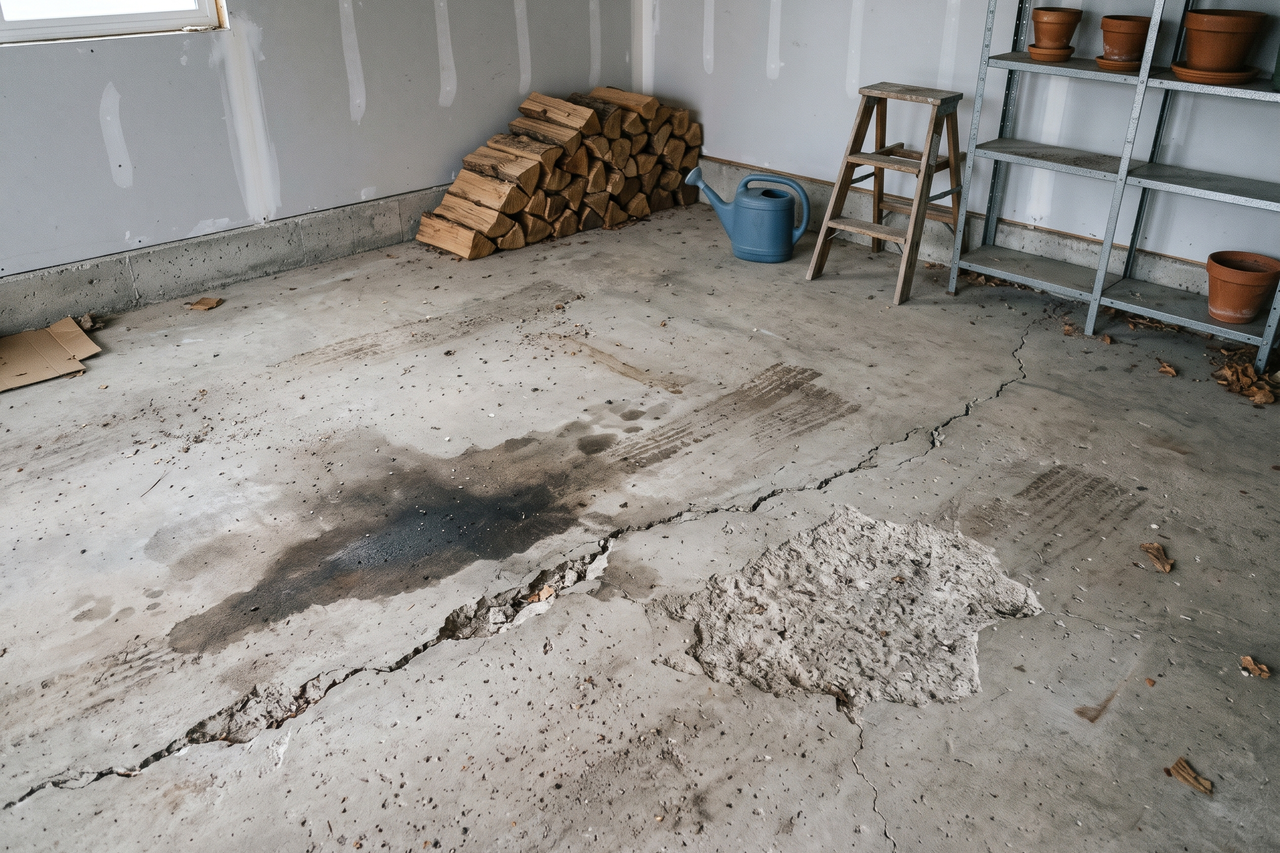
Nobody pours a garage slab to win compliments. It’s there to carry weight, and ordinary life chips away at it. Engines leak oil and antifreeze. Hot tires print dark tracks. A hammer slips off the bench and leaves a gouge. With no protection on top, the concrete just keeps collecting damage.
Concrete is full of tiny pores, so anything that lands on it heads downward. Wipe up a drip promptly and a faint shadow may still stay behind. On top of that, the slab keeps shedding a fine gray powder that ends up on storage totes, bikes, the lawn mower and whatever else is parked near the floor.
A gallon of garage-floor paint looks like the easy answer. Durable results, though, take more than a roller pushed across untreated concrete. Without grinding, the surface stays too smooth for a coating to grab. Parked vehicles, the swing between hot and cold seasons and tire heat after a drive all put stress on a weak bond, and it often gives up well ahead of what the can promised.
You Don't Have to Know Which Garage Floor Coating Is Right
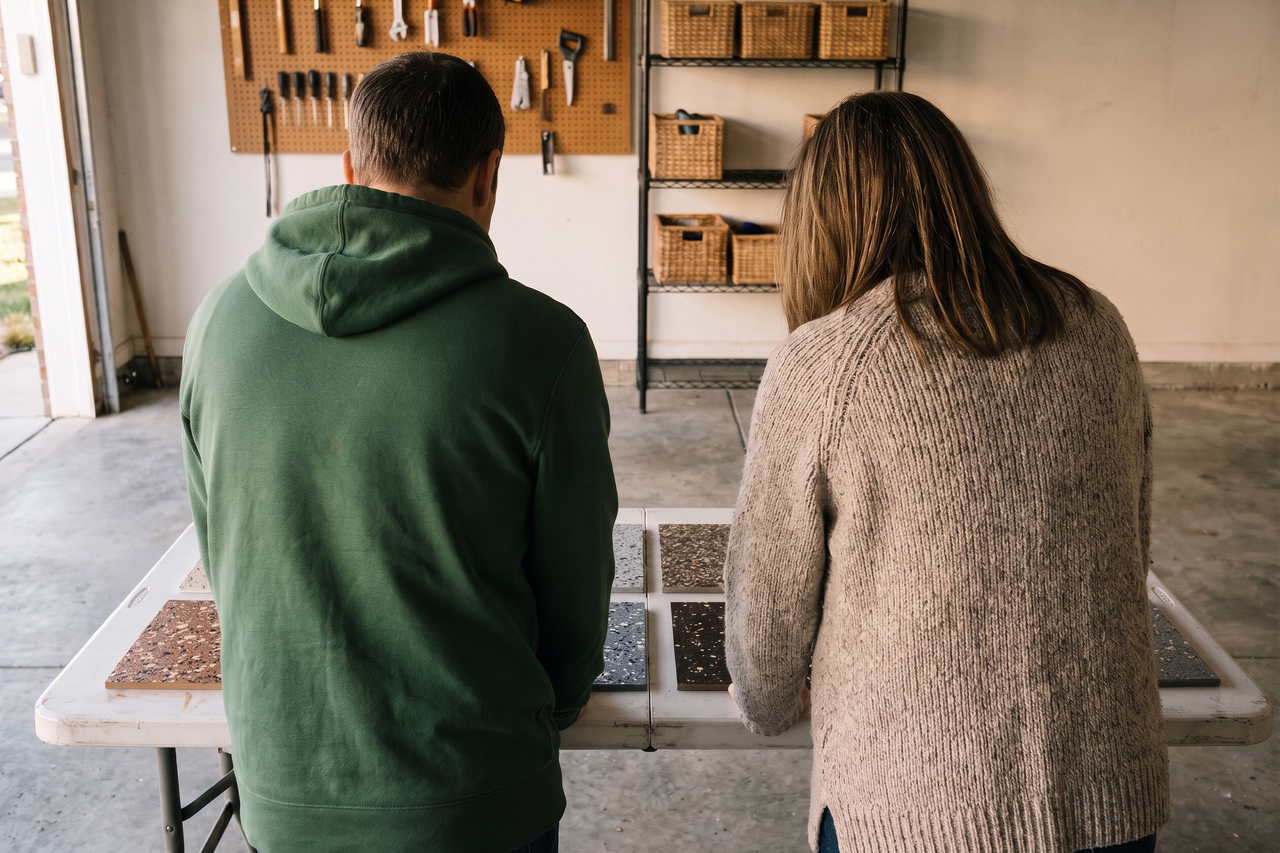
Choosing a garage coating isn’t only about color and texture. A floor soaked by an old truck’s oil leak, a slab with surface cracks, or a bay that gets blasted by late-day sun calls for another plan entirely compared with a newer, spotless slab that sits in shade. Buying a product before anyone has looked closely at the concrete makes doing it over a real possibility.
Your installer reads the slab before suggesting anything: checking moisture, finding damage that should be repaired and looking for leftover sealers that might keep a coating from sticking. Whatever that visit turns up narrows the field a lot. For hard-used floors where traction and texture count, flake is a popular direction. Metallic finishes are worth a look if you’d like the floor to steal the show.
Your Garage. Your Style. Three Simple Steps.
Three plain steps take a garage from a bare slab to a finished floor.
01
Show Us Your Garage
Fill us in on what the garage is used for, how the floor looks right now and the finish you’d like to see when it’s done.
02
Choose Your Floor
The flooring professional inspects the slab on site, goes over the coatings that fit it and, where the project is a fit, builds any quote around what that inspection finds.
03
Come Home to a Finished Garage
Your installer does the prep and the coating, then explains the cure guidance before the floor goes back to work.
Ready to See What Your Garage Could Become?
Share a few details about your garage and the look you’re after to request a customized quote for the floor.
The Wrong Garage Floor Can Cost You Twice
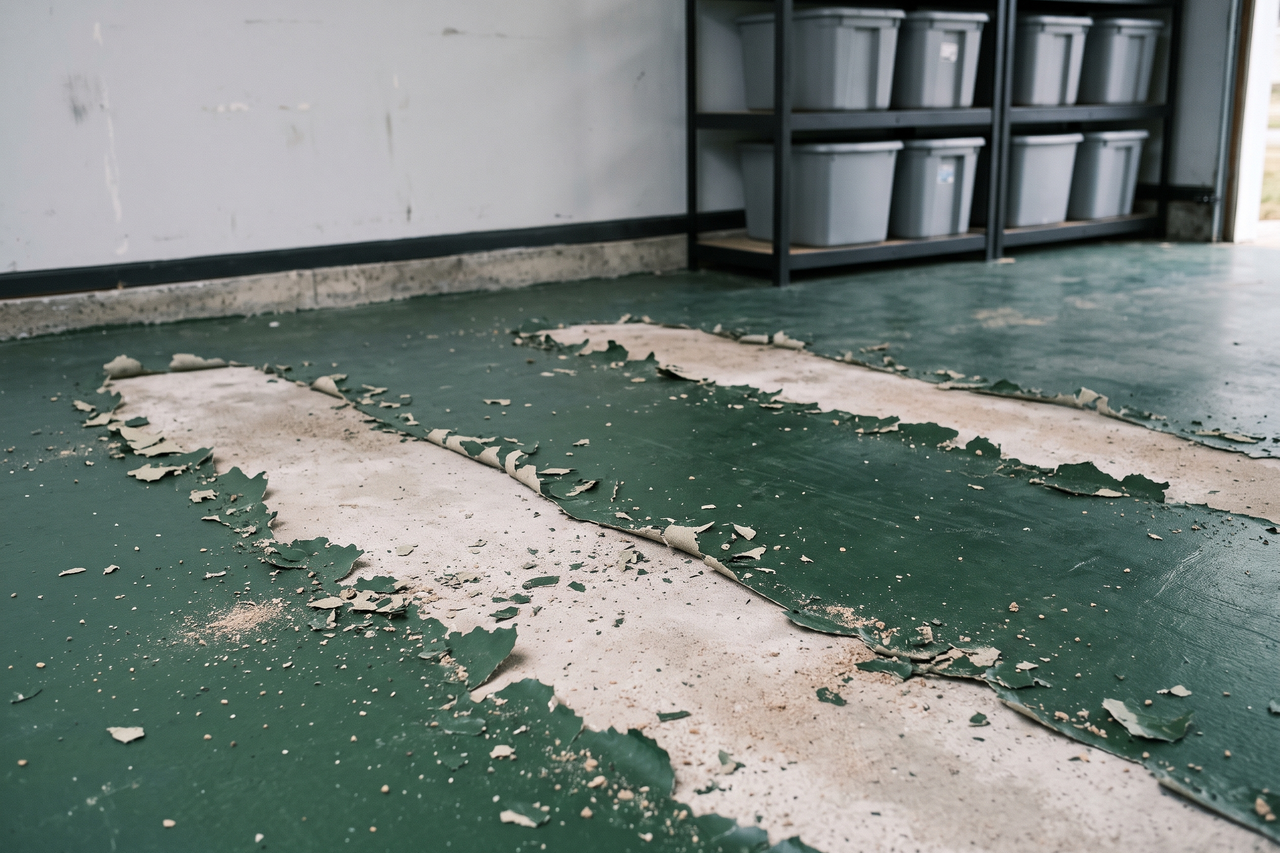
A garage coating that lets go early usually had the problem baked in from the outset. Moisture that was never measured, a film of grease left on the concrete, a product picked with no thought for the slab, or an install done in the wrong temperature or humidity can each undermine the bond. Overlook them, and the familiar result is peeling in the tire lanes and lifting under heavy loads.
Rolling a fresh coat over a failing one doesn’t help. Any loose or delaminated coating must be ground away until sound, clean concrete shows, and only then can a new system grip, and that tear-out is a whole separate job with separate labor and cost.
Good prep and a system picked for the real slab give a garage floor much better odds. Trimming steps to save money at the start is one of the usual reasons a floor needs another round of work earlier than it should.
A Garage You're Proud to Come Home To
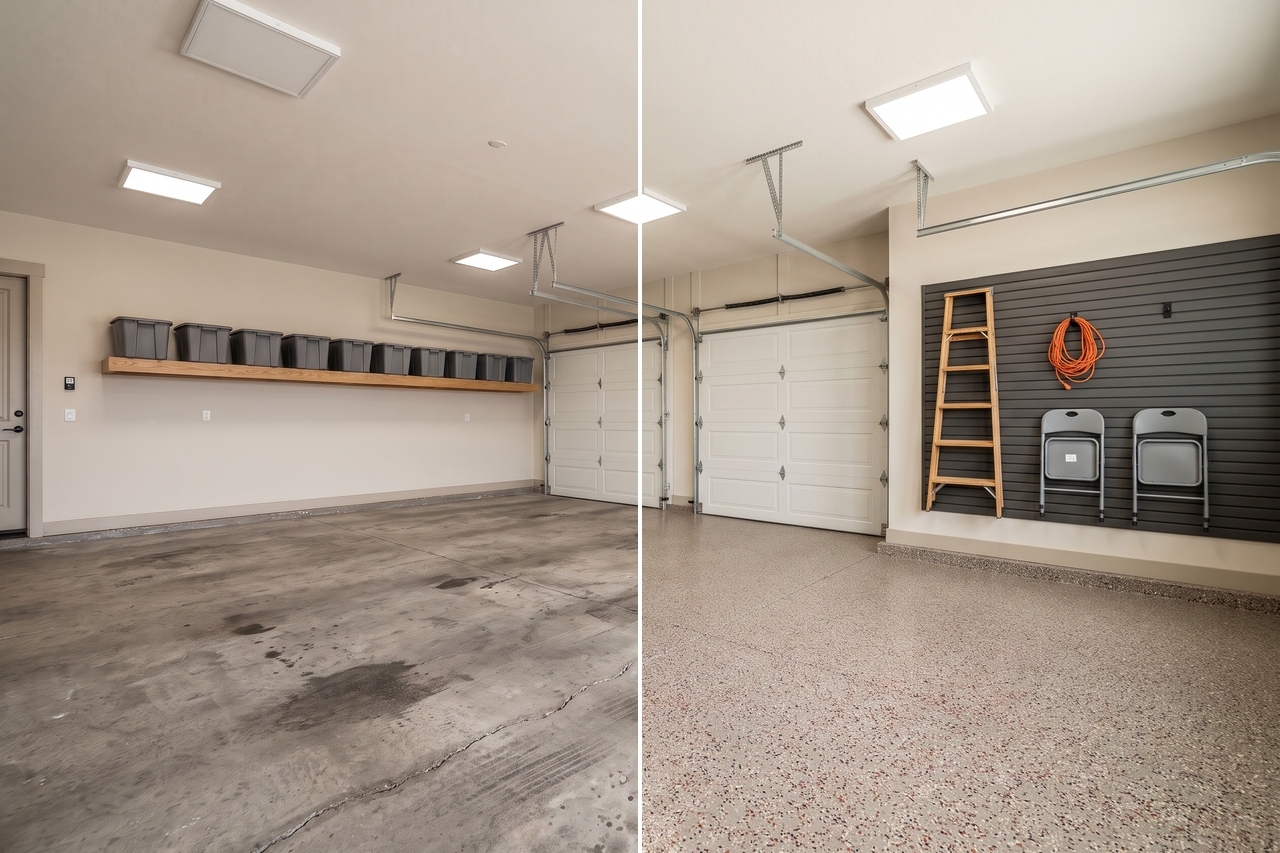
Once a good coating is down, the garage behaves differently. The drip that would have marked bare concrete wipes away with a rag. That constant slab dust drops off noticeably. And the sealed surface takes scraping and the grit that rides in on tires far better than plain concrete can.
Looks are only part of it. Parking, storing and working on projects take place on a surface that helps out instead of adding grime.
Run through what your garage actually does for the household: which vehicles and equipment live there, which projects get done there and the amount of foot traffic it gets. Let that picture guide the coating you pick and the finish on top.
What Does Garage Floor Coating Cost?
Garage coating prices don’t come in one size. Square footage matters, and so do the condition of the slab, how much prep it takes, your finish choice and the exact coating product. Solid color, flake and metallic systems differ in what they require in materials and labor.
A figure worth trusting comes from your own floor. A quote that accounts for how the concrete really looks and the result you have in mind is the one to plan around.
Common Garage Floor Questions
Do hot tires damage a professionally installed garage coating?
Hot tires are tough on floor finishes, and hardware-store paint over unprepared concrete tends to release under that heat and pressure. A professional system on a correctly ground slab is designed to take that stress far more reliably. Both the product and how carefully the slab was prepped shape how it performs, so your installer looks at both on site before suggesting a system.
What's done about cracks and oil spots before coating?
Both are addressed in the prep stage, before the coating goes down. Cracks and joints get filled, and oily patches are degreased before the grinder runs. Where oil has penetrated far into the slab, the flooring professional weighs how much the concrete can realistically hold and explains the options plainly.
Is a coated garage floor slippery once it's wet?
A smooth, shiny floor loses some traction when it’s wet, so grip should be part of the plan. Broadcast flake gives the whole surface more texture. In spots where water gathers, like the entry or around a floor drain, a topcoat with anti-slip additive gives extra footing.
After coating, when can the garage go back to normal use?
That depends on the system and the conditions while it cures, temperature and humidity included. Your installer explains it before work begins, which makes it easier to plan for a garage that’s out of use.