
Epoxy Basement Flooring
in Perryville, MO
A sealed, coated basement floor gives the room a clean starting point for whatever you want it to be.
Your Basement Shouldn't Feel Unfinished From the Floor Up
A bare basement floor quietly holds the whole room back. Gray concrete tells everyone the space is still a work in progress, whether you picture a home gym, an office, a laundry area or a workshop down there. People register the floor before they notice anything else about the room.
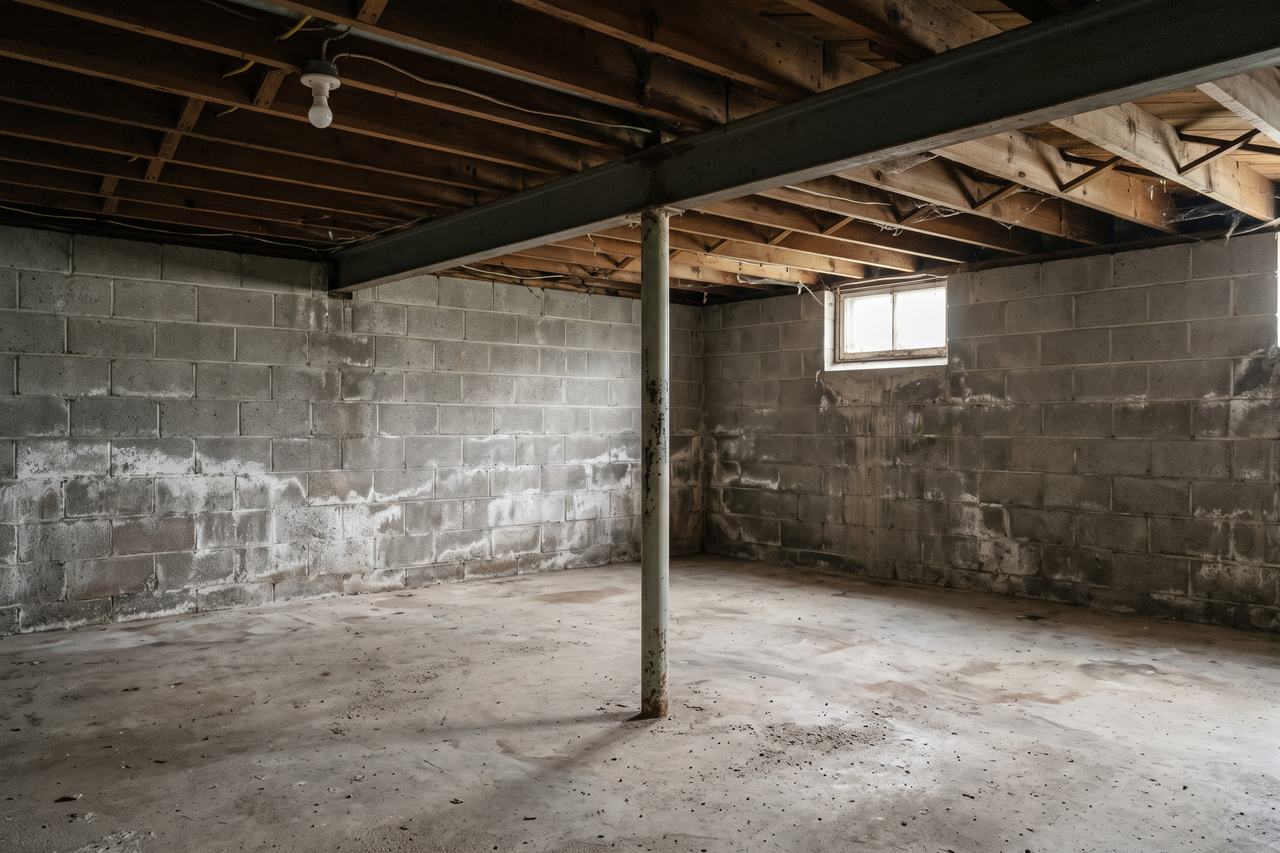
Uncoated concrete in a basement is hard to keep clean. Dust rises off the surface and settles on boxes and furniture. Liquids soak in almost the moment they land and leave marks that a mop cannot lift. No amount of sweeping makes that porous surface feel truly clean.
Many flooring products that work well upstairs have trouble on a below-grade slab. Concrete in contact with the ground behaves differently from floors higher in the house, especially where moisture is concerned. A coating made for concrete gives the basement a surface suited to those conditions instead of one fighting them.
The Right Basement Floor Starts With the Concrete Underneath
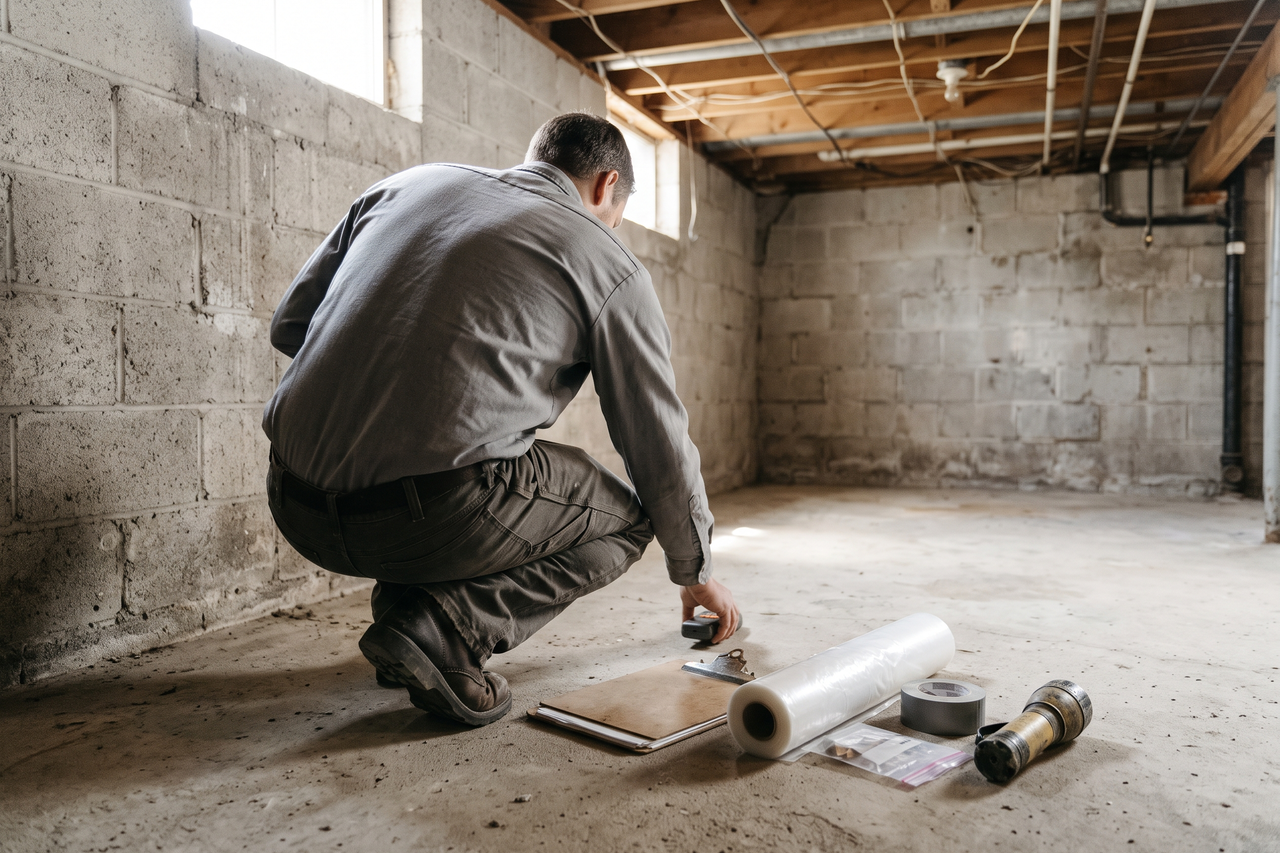
Below-grade concrete comes with its own set of variables. Vapor rising through the slab, pressure from the soil outside, leftover glue or sealer, existing cracks and old patch jobs all affect how much preparation the floor needs before a coating will bond.
Before any system is chosen, your installer checks the slab, looking at how moisture shows up and how sound the concrete is overall. On a basement floor, skipping that step leaves moisture questions unanswered, and vapor pushing up from beneath can cause trouble that nobody saw when the project began.
Once the condition of the concrete is clear, picking a finish gets much easier. Solid color gives a clean, uniform look. Flake adds texture and grip for floors with regular foot traffic. Metallic epoxy creates a deep, glossy effect that paint simply cannot imitate.
A Better Basement Floor Is Easier Than You Think
The process tends to be more manageable than most homeowners expect.
01
Tell Us About Your Basement
Explain what you want the room to become, how the floor looks right now, and whether the slab has had moisture problems or a previous coating.
02
Choose the Right Floor
After inspecting the slab in person, the flooring professional explains which systems the concrete can support and suggests a finish that fits both its condition and your plans for the room.
03
Transform the Space
Your installer takes care of surface prep, applies the coating, explains how it cures and then hands the finished floor back to you.
Ready to Make Your Basement Feel Finished?
Tell us how the basement looks today and how you would like to use it. Some basic information about the floor and your plans for the room is enough to request a customized basement flooring estimate.
Don't Turn Your Basement Floor Into a Project You Have to Do Twice
When basement coatings fail, the cause is usually something that existed before installation. Old sealer or glue that was not removed, concrete that was not ground and moisture that went untested are among the most frequent culprits. All of them are in place before the first coat touches the floor.
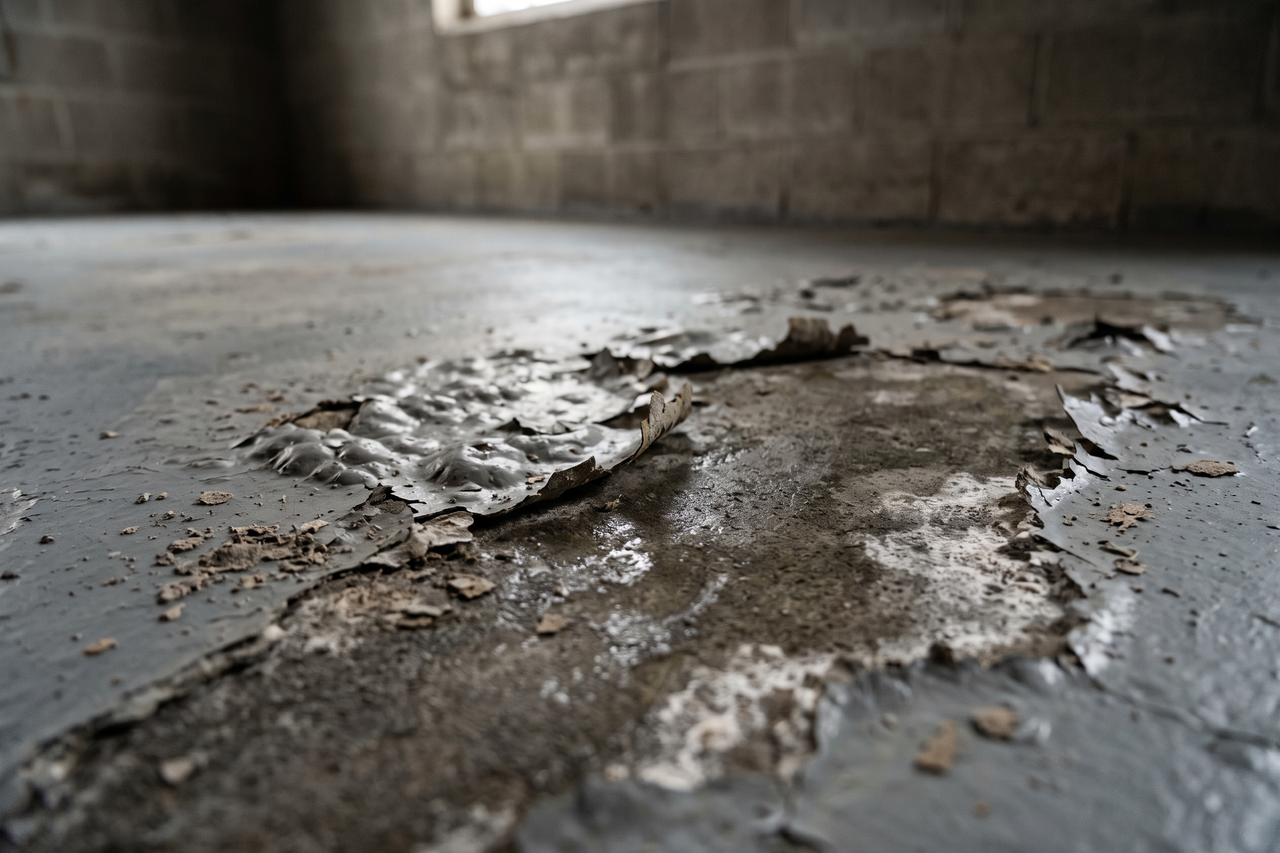
Basement slabs deal with moisture conditions that upper floors seldom face. If vapor movement and soil pressure are not checked ahead of time, that force can push the coating off the concrete from below, causing blisters, curled edges and loose patches in spots that seemed fine at first. Budget jobs often leave out moisture testing, and the consequences tend to surface after the work is done.
Grinding, crack repair and moisture checks completed before coating give the floor a fair shot at performing well over the long run. When those steps get skipped, the eventual fix often means stripping the failed coating down to bare concrete, which costs more than doing the prep properly in the first place.
A Floor That Changes How Your Basement Feels
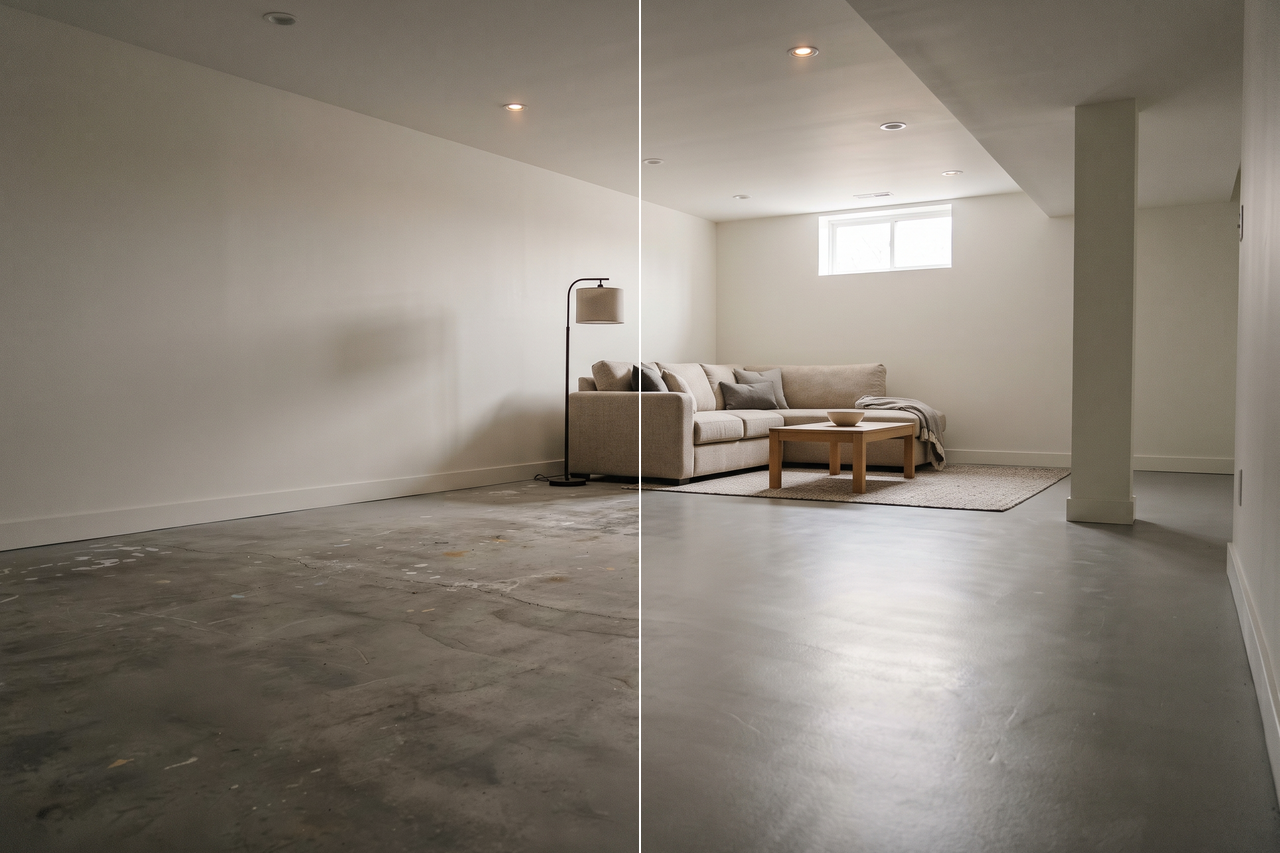
A coated basement floor changes the feel of the whole room. The smooth finish reflects light instead of soaking it up, so the space looks bigger and brighter than it did with bare concrete. Dirt sweeps up easily, and spills sit on the surface long enough to be wiped away.
There is a practical side, too. A lower level that once held only overflow boxes becomes a room people actually choose to spend time in. The floor often decides which kind of basement you end up with.
How a basement gets used often comes down to how its floor was treated. A sealed, finished surface tells everyone the room was taken seriously, and people tend to treat the space accordingly.
What Does Epoxy Basement Flooring Cost?
The price of a basement coating depends on several things: the size of the floor, what the slab inspection reveals about condition and moisture, whether old glue or coatings must come off, how much crack repair is required and which system and finish you choose.
Ballpark numbers are not very helpful for basements, because the slab itself drives the true cost. An estimate based on what the floor actually shows, plus your plans for the space, is the number worth planning around.
Common Questions About Epoxy Basement Flooring
Can a basement floor with moisture problems be coated?
It depends on how the moisture appears and how high the readings are, and both need to be understood before a system is chosen. Some slabs can take a moisture-tolerant primer or a vapor barrier layer, while others need the source of the moisture fixed before coating makes sense. Your installer reviews what the concrete shows and explains which options are realistic and under what conditions.
Does coating the floor fix basement water leaks?
No. A floor coating treats the surface of the concrete. It does not stop water coming through walls, foundation joints or failing exterior drainage, and those sources need their own repair. A coating placed over active water intrusion is unlikely to stay bonded and is no replacement for fixing the cause.
Does old glue or a previous coating have to come off first?
Usually, yes. Old coatings, adhesives and residue get in the way of the bond a new system has to form with bare concrete. Coating over them weakens the floor before the job is even finished. The flooring professional determines what the slab needs to reach the condition the chosen system requires.
Does a coated basement floor feel different from bare concrete?
The concrete underneath is the same, so the floor is still firm and stays close to the temperature of the room. The difference is the surface: rough, dusty concrete is replaced by a smooth, sealed finish. Area rugs and mats sit on a coated floor just as they would on any other hard surface.
What finish options work well in a basement?
Most basement projects use one of three finishes. Solid color offers a clean, even appearance that is easy to care for. Flake adds texture and does a better job of hiding everyday scuffs. Metallic creates a rich, layered look that few other floors can rival. The right pick depends on how you will use the room and the style you want.