
Epoxy Floor Repair
Coated floors fail in different ways. Cracks through the finish, patches lifting off the slab and areas worn down to bare concrete each point to a different cause, and the right repair starts with knowing which one you are dealing with. A contained problem on an otherwise sound floor may need only targeted work, while a floor with widespread bond loss may need a fresh start. Telling the two apart takes a close look at the coating and the concrete under it.

The Short Answer
Damage patterns hint at their source. Chips and cracks through the coating usually trace to impacts from above or movement in the concrete below. Peeling and lifting mean the bond between coating and slab has failed. Dullness and staining build up from traffic and chemical contact. Since each type of damage has a different cause, each needs a different repair, and the right path begins with an evaluation of what failed, how far the problem reaches and the condition of the concrete underneath.
Common Problems With Epoxy Floors
What an evaluation commonly turns up in the main categories of coating damage.
01
Cracks & Chips
Two kinds of damage show up often. Impact damage such as chips, gouges and scrapes comes from above when tools, equipment or heavy objects strike the coating. Cracks passing through the finish usually start below, driven by settling, load changes or temperature movement in the concrete that carries up into the finish. If the damage is limited and the surrounding coating is still firmly bonded, targeted repair of those spots may be possible. Your installer makes that call after reviewing the damage and its likely cause.
02
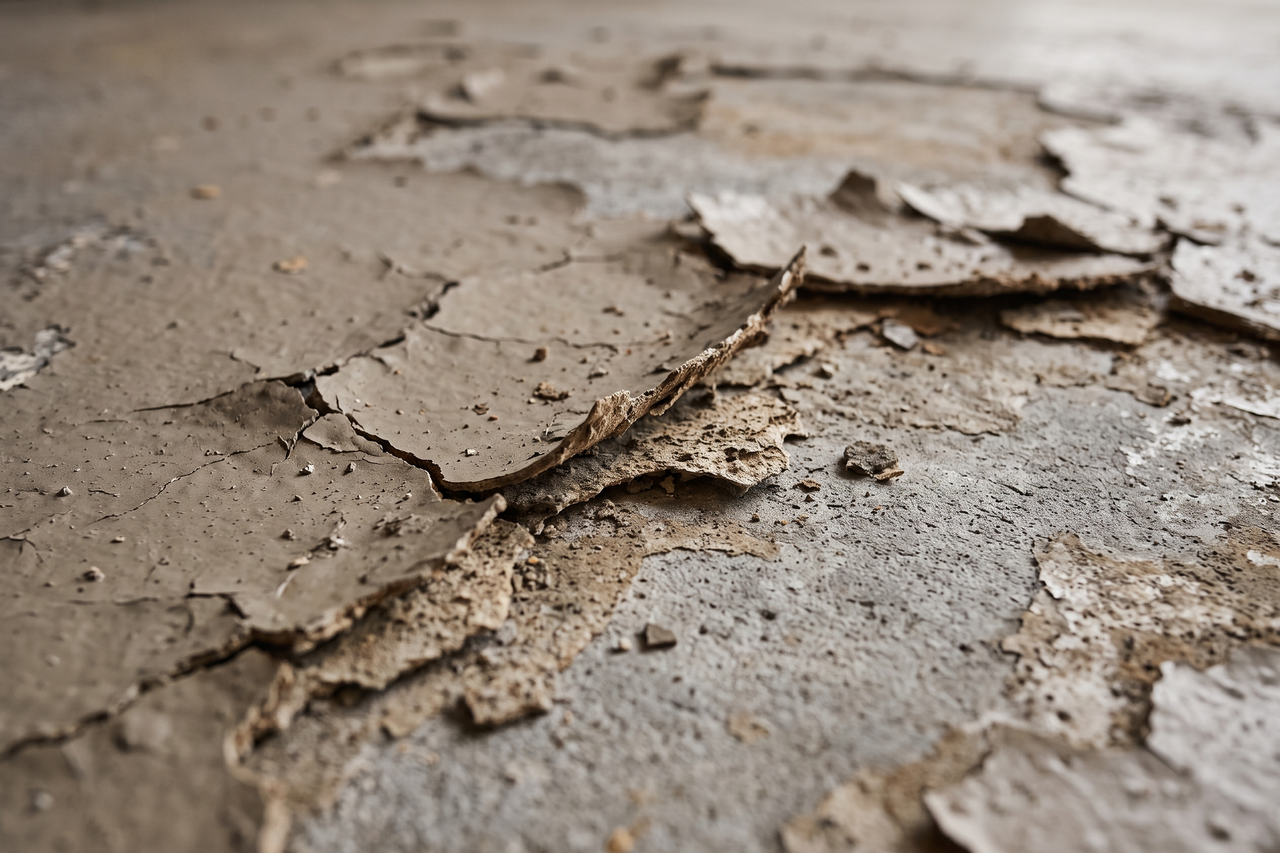
Peeling & Delamination
Once a coating starts releasing in one spot, the failure tends to spread rather than stay put. Peeling means the bond between coating and concrete has broken, and finding out why is central to a repair that lasts. This kind of failure frequently goes back to how the floor was first installed: untested slab moisture, concrete left without the profile the product needed, or an old layer that kept the new coating from reaching sound concrete. Pinpointing the cause is what makes a durable fix possible.
03
Stains & Surface Wear
Scuffing, dullness and discoloration from daily use and spills are a separate issue from bond failure. The coating can look tired while the layers below remain firmly attached to the concrete. In that case, a fresh topcoat over the intact base may be enough. Before suggesting that route, your installer checks adhesion and reviews the overall condition of the coating.
How Do Professionals Repair Peeling or Damaged Epoxy Floors?
Repair work begins with a thorough inspection of the existing floor. It shows which areas of the old coating are still well bonded, what caused the failure and what shape the concrete is in where the damage occurred.
Loose or lifting material comes out; new product does not go over it. Areas that sound hollow when tapped, or that peel away with little effort, have already lost their bond with the slab, and covering them only moves the failure somewhere else. Once the failed coating is removed, the concrete is cleaned and profiled so the repair material or fresh coating has solid concrete to grip.
If separation is widespread, the plan may shift from spot repairs to a full recoat, a decision made only after the full extent of the damage is understood.
How well a repair holds depends heavily on how the exposed concrete is prepared after stripping. Our overview of slab preparation for coatings explains what that work involves.
Can an Epoxy Floor Be Repaired, or Does It Need to Be Replaced?
Repair and replacement are both legitimate outcomes. The deciding factors are how much of the existing coating is still bonded and what caused it to fail.
Full removal is not the automatic first step. When damage is confined to a defined area, such as one lifted patch, a cluster of impact chips or a single stable crack, repairing those spots and keeping the sound coating can be a practical and economical way to extend the floor’s service life.
Stripping and recoating makes more sense when bond loss covers most of the slab, when the original cause of failure has not been corrected, or when deterioration is too advanced for spot repairs to be effective.
Looking at the floor is not enough on its own. Tapping the coating, testing adhesion and examining the concrete in trouble spots give a far clearer picture than a walk-through. If a complete new floor turns out to be the better path, our guide to the epoxy installation process explains each stage of a new installation.
How Much Does Epoxy Floor Repair Cost?
A useful repair price requires seeing the floor. Repair can mean anything from sealing one hairline crack on an otherwise solid floor to stripping and recoating a slab where adhesion has failed nearly everywhere. Scope depends on the type and extent of damage, how much coating has to come off, the condition of the concrete beneath and the preparation the work requires.
A number offered without inspecting the floor has little practical use.
What Causes Epoxy Floors to Fail, and How Can You Prevent It?
Knowing why coatings fail helps whether you are planning a new floor or dealing with one that is already showing trouble. A familiar set of causes appears again and again in coatings that gave out early.
Improper Concrete Preparation
Investigations of failing coatings frequently point to preparation: a profile that never reached the required depth, contamination left on the surface, or an earlier coating that stopped the new product from reaching sound concrete. Any of these can deny the coating the mechanical grip it relies on. Such a coating may look fine at first and then gradually lose its hold under traffic and wear.
Preparation deserves its own dedicated stage in every coating project. Our concrete preparation page describes what a thorough process includes.
Excess Moisture
Slab moisture is easy to overlook during installation and hard to fix once a coating is down. Vapor collecting at the slab-coating boundary pushes against the bond from below, and blistering, bubbling or gradual separation can appear well after application as a result. Measuring moisture before coating lets product choices reflect what the slab is really doing.
Heavy Impacts and Chemical Exposure
Every coating has limits tied to what it faces. Heavy dropped objects, chemicals the product was not designed to resist and constant abrasion from busy foot traffic can each wear down a properly installed floor. Choosing a product suited to the real demands of the space is part of the original decision.
Improper Installation or Curing
Good preparation cannot rescue a floor if mistakes happen during application. An incorrect mix ratio, applying outside the temperature or humidity range the product requires, rushing between coats and poor curing conditions can each cause early failure on their own.
Before work begins, your installer should explain the curing requirements and the site conditions the product needs while it is applied and as it cures. When a failure traces back to application, redoing the work under proper conditions is often the right move. To see what a well-run installation looks like, read our step-by-step installation overview.
Can Garage, Basement, and Commercial Epoxy Floors Be Repaired?
The right repair approach changes with the setting. The type and extent of damage, along with how hard the space is used, determine what response makes sense.
Garage Floor Repair
Garage floors face a tough combination of vehicle weight, temperature swings, fluid and chemical spills and direct hits from tools and equipment. Impact chips, stable cracks and contained patches of separation are among the most common findings. When those problems are limited and the surrounding coating is firmly bonded, repairing only the affected areas may work. When chemical damage or bond loss covers much of the floor, stripping and recoating is usually the better recommendation. Our garage floor coating page covers what a well-built garage system typically includes.
Whether part of the garage can stay usable during the work depends on the project and the contractor, so it is a good topic to raise while discussing the estimate.
Basement Floor Repair
Basements see moisture-related coating failures more often than most other settings, which shapes what a successful repair must address. If moisture caused the original failure and still has not been dealt with, a new coating over the same conditions is likely to fail the same way. Your installer reviews the coating’s condition and the slab’s moisture readings before recommending a repair approach. Our basement coatings page explains planning considerations specific to basements.
Commercial Epoxy Floor Repair
A failing floor in a commercial space is more than a cosmetic issue. Damage that affects safe movement, sanitation or daily operations becomes a real business concern. When damage is localized and the surrounding coating is still sound, targeted repair can be practical. Widespread adhesion loss usually calls for a larger scope.
Whether the facility can keep operating during the work depends on the project and the contractor, so bring it up during the estimate discussion. Our commercial epoxy flooring page outlines what larger commercial coating projects typically involve.
Frequently Asked Questions About Epoxy Floor Repair
Will a store-bought patch kit fix a peeling floor?
Patch kits exist, but using one without understanding why the coating failed is unlikely to last. If the cause is untested slab moisture, poor profiling on the original job or the wrong product for the surface, another layer over those same conditions tends to fail the same way. Fixing the underlying cause is what gives a repair a real chance.
How is the choice made between spot repair and full replacement?
It comes down to how far bond loss has spread. Tapping the floor and testing adhesion show which areas are still firmly attached and which have released. A contained failure surrounded by sound coating often suits targeted repair, while bond loss across most of the slab usually makes a full strip and recoat the more dependable route.
How is the repair timeline determined?
It depends on how much of the floor needs work, the preparation the concrete requires and the coating product. Your installer explains the timeline before work begins, including when the floor can take foot traffic and what follows.
Will the repaired area blend in with the rest of the floor?
That depends on the original product, the age and wear of the surrounding coating, and how large the repaired area is. Your installer can describe realistic expectations for appearance before work starts. If a uniform look across the whole floor matters most, a full-surface recoat usually gives the most consistent result.
What makes epoxy coatings peel or break down?
Moisture in the slab is a frequent cause, but there are others: poor surface preparation on the original installation, a product unsuited to the substrate, mistakes in mixing or application, and curing conditions that prevented the coating from fully hardening. Where and how the damage appears helps a flooring professional identify the most likely cause.
Can a worn but well-bonded floor simply be recoated?
In some cases. If testing shows the existing coating is still firmly bonded and the wear is limited to the surface, a fresh topcoat over the prepared base may be suitable. Suitability depends on the system selected, the condition of the coating and the demands of the space, which an evaluation confirms.
Ready to Evaluate Your Floor in Perryville, MO?
Seeing cracks, peeling or worn-through spots in your epoxy floor? Describe the damage and roughly how much of the floor it covers to request a customized repair estimate.