
How Much Does Epoxy Floor Coating Cost?
Ask a handful of people what an epoxy floor costs and the answers can be far apart, often because they are pricing different work. This guide breaks down what goes into a professional estimate, why each factor raises or lowers the total, and what a thorough proposal should list.

The Short Answer
For planning, professionally installed epoxy floor coatings commonly fall between $6 and $10 per square foot. Using $8 as a midpoint, a typical two-car garage lands roughly between $3,200 and $4,000. The actual figure for your project depends on the floor's size, the preparation the concrete needs and the coating system that suits the space, details that become reliable only after an in-person evaluation.
What Affects the Cost?
Most of the difference between epoxy coating proposals traces back to five factors.
01
Floor Size
Larger floors use more material and labor. Some costs, though, barely change with square footage, including hauling equipment, setup and mobilization. Spread across a big slab, those fixed costs make up a smaller slice of the total; on a small floor they weigh more. Careful measurements give any estimate a dependable starting point.
02
Concrete Condition
Oil-soaked areas, old sealers, widespread cracking or a deteriorated surface all add preparation before coating can begin. A structurally sound slab with no previous treatment needs far less work to reach the profile a coating requires.
03
Surface Preparation
Grinding opens the concrete and creates the texture coatings bond to. The amount of grinding depends on the slab: hard-troweled finishes, damage and existing coatings all expand the scope. An estimate that includes real preparation reflects the true cost of a floor built to perform.
04
Coating System
A single-coat application sits at the low end for materials. Multi-layer builds with primer, decorative flake, a high-build base coat and a urethane or polyaspartic topcoat use considerably more product. The right system comes from the slab’s condition and the needs of the space, not a default package.
05
Decorative Finish
Solid colors are the simplest to apply and the least expensive decorative option. Flake systems take more material and labor and deliver a textured, speckled look. Metallic finishes require specialized technique and sit at the top of the decorative price range.
What Are You Really Paying For?
To see each stage of a professional coating project and the purpose behind it, read our walkthrough of the installation process.
An estimate covers the whole job: preparation and application labor, grinding equipment and consumables, commercial-grade materials and the expertise to pick the right system for the floor in question. Materials are just one part of the total.
When one quote comes in far below the rest, it is fair to ask what is missing. Less grinding, fewer coats or skipped crack repair add up to a smaller scope, not the same job done more cheaply. Comparing proposals line by line is the dependable way to see what each includes.
Cutting preparation, coats or repairs lowers the price because it shrinks the project, and over time the floor tends to show the difference.
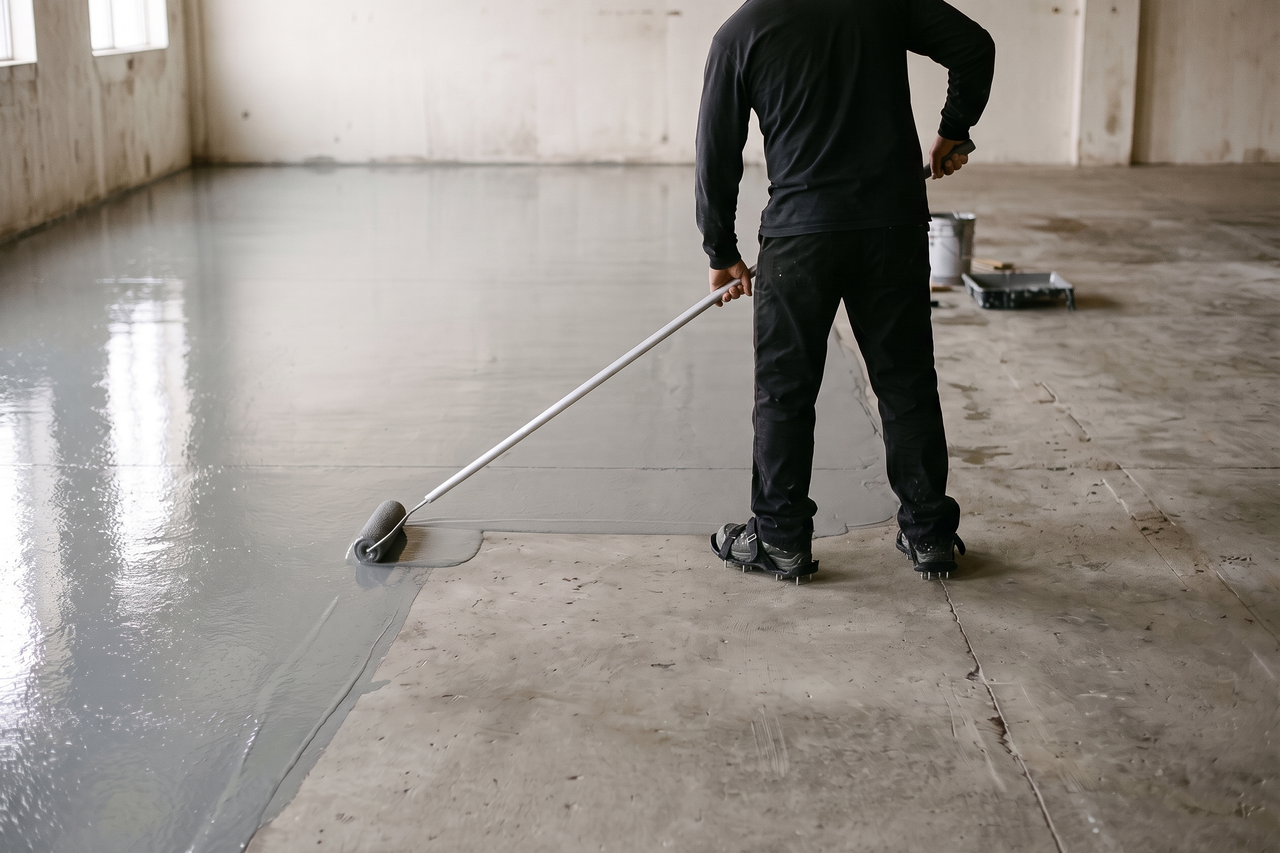
How Much Does a Garage Floor Cost?
Applying the $8 planning figure to common garage sizes gives these rough budgeting numbers.
| Garage Size | Square Footage | Planning Estimate |
|---|---|---|
| Single-car garage | 250 sq ft | $2,000 |
| Standard 2-car garage | 400 sq ft | $3,200 |
| Oversized 2-car garage | 500 sq ft | $4,000 |
| 3-car garage | 750 sq ft | $6,000 |
*Each estimate above multiplies square footage by an $8 planning rate, a point inside the $6–$10 range typical of professional installations. These are planning numbers, not quotes. Actual pricing depends on the condition of your concrete, the preparation it requires and the coating system chosen, and it can only be set once the floor has been evaluated in person.*
Is It Worth the Cost?
Consider what a garage floor goes through: tires rolling in and out, drips from parked vehicles, dropped tools and equipment dragged across a surface never designed to stay attractive. Bare concrete takes all of it.
Uncoated concrete is porous. Liquids soak in and stain, discoloration builds with use, and the surface wears under mechanical stress. A coating applied over concrete that was not properly profiled may not bond reliably, and it can lift or peel, leaving the owner paying for the floor a second time.
A coating chosen for the real conditions of the space does a far better job than bare concrete of keeping liquids on the surface where they can be cleaned up. That advantage counts most in garages, workshops and utility rooms where appearance and easy cleaning matter.
What Should Be Included in Your Quote?
A thorough proposal spells out the full project, not just the coating product. When you review a written proposal, check that it covers each of these items:
- Concrete evaluation — moisture readings and a hands-on review of the slab before any work is planned
- Surface profiling — diamond grinding or shot blasting to give the concrete the texture a coating needs to bond
- Crack and spall repair completed on bare concrete ahead of any coating
- Primer selection based on the slab’s moisture readings and how absorbent the concrete is
- Base coat and broadcast — the color layer and decorative flake applied according to the chosen system
- Topcoat application suited to the traffic and conditions the floor will face
- Site cleanup including grinding dust, prep debris and disposal of waste
- Cure-stage guidance explaining what the floor can handle at each stage after the final coat
If something on this list is missing from a written proposal, ask the contractor how it will be handled before you sign.
Frequently Asked Questions
Q: Why are epoxy floor estimates so different from one contractor to another?
Most of the gap comes from scope. Less preparation, fewer coats or no allowance for crack repair all mean less work, and a lower price reflects that rather than better efficiency. Comparing proposals item by item shows what each one actually includes.
Q: Do bigger floors usually cost less per square foot?
Often. Mobilization costs such as hauling equipment and site setup do not grow with floor size, so on a large slab they are spread across more square feet. On a small floor they make up a bigger share of the total.
Q: Is the $6–$10 range useful for early budgeting?
It works as a starting point. Using $8 as a midpoint with the garage table above gives a rough figure based on size alone. The range cannot account for the condition of your concrete, the preparation it needs or the system that fits, so a meaningful number depends on someone evaluating the floor in person.
Q: How much can the condition of the concrete change the price?
Quite a bit in some cases. Extensive repairs, removal of an old coating or heavy patching add labor and materials to the preparation stage. On a slab with serious problems, preparation can make up a substantial share of the estimate.
Q: What expenses might fall outside the flooring proposal?
Moving vehicles, equipment and stored belongings out of the space beforehand is usually the owner’s responsibility. Structural slab problems, drainage corrections and repairs beyond the coating scope are generally not part of a standard flooring proposal.
Q: What does a higher estimate usually mean?
A higher number often reflects a more complete scope, such as additional coats, higher-grade materials or a system built for tougher conditions. Price by itself proves nothing, so ask what the number includes and why that system suits your floor. A clear, specific answer suggests the recommendation was carefully considered.
Ready to Get a Real Number for Your Floor?
Serving Perryville, MO and surrounding areas. Share the details of your floor and request a customized quote based on what it actually needs.